When a COVID-19 case or other contagious illness is confirmed in your Toronto office, the decisions you make in the next 24 to 48 hours will determine how quickly your team can safely return to work and whether the outbreak spreads further. A reactive wipe-down with consumer-grade products is not sufficient. Post-outbreak cleaning requires a structured, science-based approach that eliminates pathogens from every surface, restores indoor air quality, and gives your employees the confidence that their workspace is genuinely safe. This guide walks you through the complete process, from the moment you learn about a confirmed case to the day you reopen your doors, so your business can respond decisively and protect your team.
When Professional Disinfection Is Needed
Not every illness in the office requires a full professional disinfection, but certain situations demand immediate expert intervention. If a confirmed case of COVID-19, influenza, norovirus, or another highly contagious illness has been reported among your staff, professional disinfection is strongly recommended rather than optional. The same applies when multiple employees fall ill within a short period, suggesting active transmission within the workplace. Offices with vulnerable populations, such as those located within or adjacent to medical or dental facilities, should have an even lower threshold for calling in professional disinfection teams. Standard janitorial cleaning focuses on appearance and general hygiene, but post-outbreak disinfection targets specific pathogens using Health Canada-approved disinfectants with verified contact times. The distinction is critical because inadequate cleaning after an outbreak can create a false sense of security, allowing the pathogen to persist on surfaces and reignite transmission when employees return.
High-Touch Surface Cleaning Protocols
High-touch surfaces are the primary battleground in any post-outbreak cleaning effort. These are the surfaces that multiple people contact throughout the day, and they serve as the most efficient transmission points for bacteria and viruses. A thorough post-outbreak protocol must address every one of these surfaces systematically:
- Desks, keyboards, mice, and monitors: Every workstation in the affected area must be cleaned and disinfected individually, paying particular attention to the workspace of the confirmed case and all adjacent workstations within a two-metre radius.
- Door handles, push plates, and light switches: These are touched by virtually every person who moves through the office and must be disinfected on every floor and in every corridor the infected person may have used.
- Kitchen and break room surfaces: Refrigerator handles, microwave buttons, coffee machines, kettle handles, tap fixtures, and shared utensil drawers all require thorough disinfection with appropriate contact times observed.
- Washroom fixtures: Toilet flush handles, tap controls, soap dispensers, paper towel dispensers, and stall locks must be disinfected with hospital-grade products. Washrooms are among the highest-risk areas during any illness outbreak.
- Elevator buttons, stair railings, and reception counters: Any surface in common areas that employees, visitors, or delivery personnel may have contacted during the infectious period must be included in the disinfection scope.
- Shared equipment: Printers, copiers, telephones, meeting room technology, and any shared tools or devices require individual attention during the cleaning process.
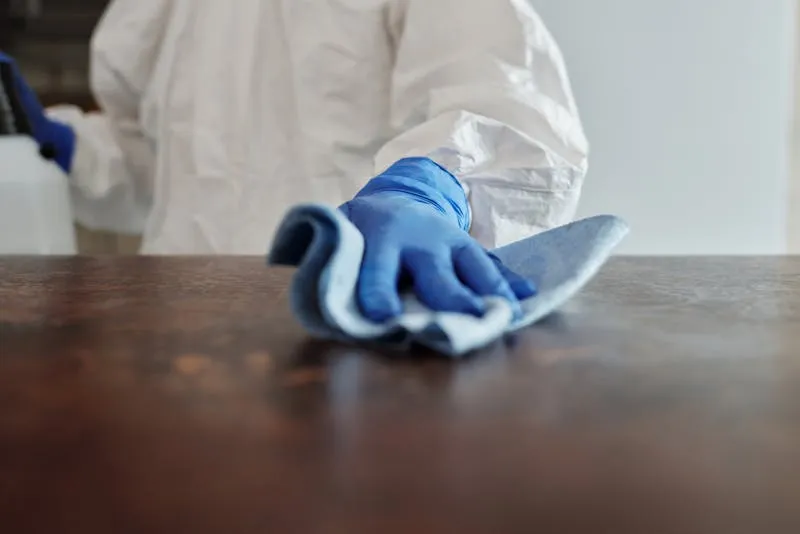
Professional cleaning teams use a two-step process: first cleaning the surface to remove visible soil and organic matter, then applying a Health Canada-approved disinfectant and allowing the full manufacturer-recommended contact time before wiping. This two-step approach is essential because disinfectants cannot penetrate through dirt or grime to reach the pathogens beneath. A proper commercial deep cleaning addresses both steps with commercial-grade products and trained technicians who understand the science behind effective disinfection.
HVAC and Air Quality Considerations
Surface disinfection alone is not enough when dealing with airborne pathogens like COVID-19 and influenza. The HVAC system in your office building plays a significant role in either containing or spreading illness, and it must be addressed as part of any comprehensive post-outbreak response. Before cleaning begins, increase the fresh air intake on your HVAC system to maximum capacity and ensure that recirculation is minimized. If your system uses MERV-rated filters, confirm that filters rated MERV-13 or higher are installed, as these capture the majority of respiratory droplets and aerosols. After the disinfection is complete, run the HVAC system at full capacity for at least two hours before allowing employees to re-enter the space. Consider having ductwork and vents professionally cleaned if the outbreak was widespread or if the HVAC system has not been serviced recently. Portable HEPA air purifiers can provide an additional layer of protection in high-density areas such as open-plan workspaces and meeting rooms. Improving ventilation is one of the most effective and often overlooked measures for reducing airborne pathogen transmission in commercial office environments.
PPE Requirements for Post-Outbreak Cleaning
Anyone involved in post-outbreak cleaning must wear appropriate personal protective equipment to safeguard their own health while performing the work. The minimum PPE requirements for cleaning after a confirmed illness outbreak include disposable nitrile gloves, a fitted N95 respirator or equivalent, safety goggles or a face shield to protect against splash exposure, and a disposable gown or coveralls that can be removed and discarded after cleaning. Gloves must be changed between different areas of the office to prevent cross-contamination, and hand hygiene must be performed each time gloves are changed. All disposable PPE should be bagged and disposed of as contaminated waste following the cleaning session. This is one of the primary reasons professional disinfection services are recommended over in-house cleaning after an outbreak: professional teams arrive with the correct PPE, understand proper donning and doffing procedures, and follow established safety protocols that protect both the cleaning staff and the office occupants who will return after the work is completed.
Health Canada Guidelines and Compliance
Health Canada maintains a list of hard-surface disinfectants and hand sanitizers that have demonstrated efficacy against SARS-CoV-2 and other pathogens of concern. Any disinfectant used in a post-outbreak cleaning must carry a Drug Identification Number (DIN) and appear on Health Canada's approved list. Beyond product selection, Health Canada guidelines emphasize the importance of following the manufacturer's instructions for concentration, application method, and contact time. Using a product at the wrong dilution or wiping it away before the required contact time has elapsed can render the disinfection ineffective. Ontario's Occupational Health and Safety Act also places obligations on employers to maintain a safe workplace, and demonstrating that you followed Health Canada protocols during a post-outbreak cleaning provides important documentation should any questions arise about your duty of care. Keep detailed records of the products used, the areas cleaned, the personnel involved, and the timeline of the disinfection process. Professional cleaning companies provide these records as part of their standard service, giving you a documented chain of compliance.
Communicating with Staff During Cleanup
How you communicate with your team during and after an illness outbreak is nearly as important as the cleaning itself. Transparent, timely communication builds trust and reduces the anxiety that inevitably accompanies workplace illness events. Notify all employees as soon as a confirmed case is identified, without disclosing the identity of the affected individual in accordance with privacy obligations under PIPEDA and Ontario privacy legislation. Clearly communicate the specific steps being taken, including the professional disinfection, the products being used, the timeline for completion, and the criteria that must be met before the office reopens. Provide regular updates throughout the cleaning process so employees know exactly when they can expect to return. If remote work is possible during the closure period, activate those arrangements immediately to minimize productivity losses. After the office reopens, share the cleaning report with staff and outline any new ongoing measures that have been implemented to prevent future outbreaks. Employees who feel informed and protected are far more likely to return to work with confidence and maintain the hygiene practices that support long-term workplace health.
Preventing Future Outbreaks
A post-outbreak cleaning should serve as a catalyst for implementing stronger ongoing prevention measures rather than a one-time emergency response. The most effective prevention strategy combines regular professional cleaning with environmental and behavioural measures that reduce transmission risk on a daily basis. Transitioning to eco-friendly cleaning products that are effective against pathogens without releasing harmful volatile organic compounds improves both disinfection and indoor air quality. Increase the frequency of high-touch surface disinfection during cold and flu season, ideally moving from weekly to daily or twice-daily wipe-downs for the highest-risk surfaces. Install touchless fixtures in washrooms and kitchens where possible, including automatic soap dispensers, paper towel dispensers, and tap fixtures. Provide hand sanitizer stations at building entrances, elevator lobbies, and meeting room doors. Review your sick leave policies to ensure that employees with symptoms are encouraged to stay home rather than pressured to work through illness. Consider implementing air quality monitoring that tracks CO2 levels and particulate matter as indicators of ventilation adequacy. These ongoing measures cost a fraction of the expense and disruption of a full post-outbreak disinfection and dramatically reduce the likelihood of needing one again.
When to Reopen Your Office
The decision to reopen your office after a professional disinfection should be based on objective criteria rather than an arbitrary timeline. At minimum, the professional cleaning team should have completed their full scope of work and provided a completion report confirming that all areas were treated according to protocol. The HVAC system should have run at full fresh-air capacity for at least two hours following the disinfection to ensure adequate air exchange. Any surface testing that was conducted, such as ATP bioluminescence testing, should show results within acceptable thresholds. Public health authorities should be consulted if the outbreak involved a reportable disease, and their guidance on workplace re-entry should be followed. In most cases, an office can be safely reopened within 24 to 48 hours of the professional disinfection being completed, provided ventilation requirements have been met. Before staff return, conduct a walkthrough to verify that all areas appear clean, that cleaning products have been fully removed or dried, and that the workspace is ready for occupancy. The first day back is also the ideal time to reinforce any new hygiene protocols and remind staff of the resources available to them.
Responding to an illness outbreak in your office is stressful, but having a clear plan and the right professional partners makes the process faster, safer, and more effective. Contact TitanEdge today to discuss a post-outbreak disinfection plan for your Toronto office or to set up an ongoing cleaning program that minimizes the risk of future outbreaks. Our team is available seven days a week and can mobilize quickly when your business needs us most.